
You can feel this in your gut when you shop for collagen: one brand screams “20g collagen!” and another talks about peptide size, source, and supporting amino acids. One looks more impressive on paper. But the mirror doesn’t care about paper.
So let’s answer the real question: is collagen a numbers game (more grams), or a biology game (absorption and signaling)?
This comparison is not here to shame any brand. It’s here to help you stop wasting 8–12 weeks on a plan that feels “logical” but doesn’t translate into visible skin changes.
Read to the end because I’ll give you a simple decision guide (with one number) that makes the choice obvious for your skin goals.
First, the uncomfortable truth: most collagen marketing is designed to confuse you
Collagen is one of the easiest supplement categories to market because:
- it’s familiar (everyone has heard “collagen = youthful skin”),
- it’s measurable (grams, types, “hydrolyzed” labels),
- and results are slow, so disappointment can be blamed on “not enough time.”
That’s why you can take collagen diligently and still feel unsure whether it’s “working” or you’re just hopeful.
What your skin is actually asking for when it “needs collagen”
Your skin isn’t asking for a scoop of collagen powder. It’s asking for a process:
- Absorb peptides and amino acids through digestion.
- Signal fibroblasts (the collagen-making cells) to build and remodel.
- Supply enough building blocks (and the right ones) to finish the job.
- Protect the new collagen from breakdown (sun, inflammation, poor sleep).
When you focus only on grams, you focus on the most visible metric, not the most biologically useful one.
The big difference: quantity vs bioavailability
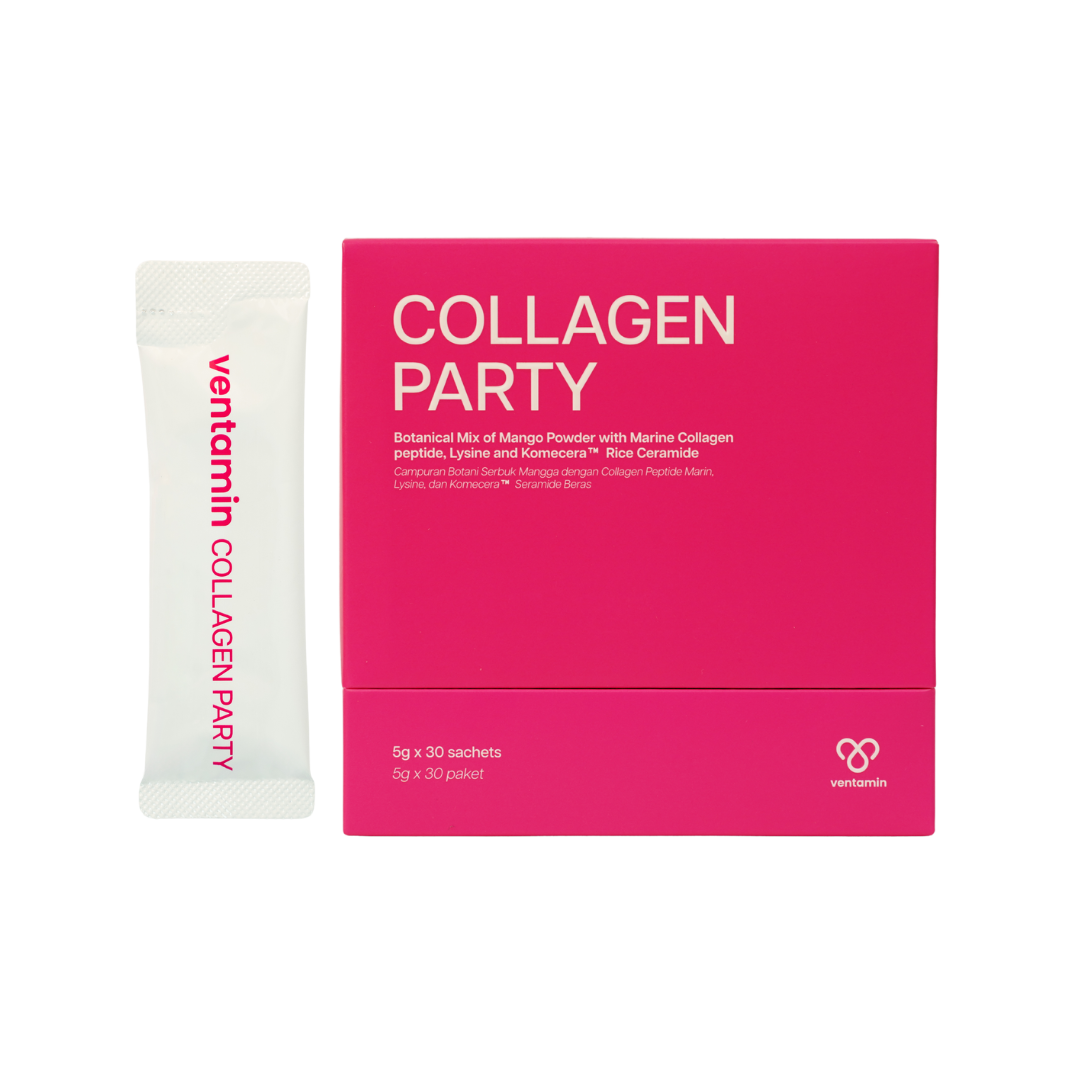
VitaGlow is often positioned around quantity (high grams). Collagen Party is positioned around bioavailability and function.
Here is how I explain it to patients:
- Quantity asks: “How much collagen is in the scoop?”
- Bioavailability asks: “How much of this becomes usable signals and building blocks in your body?”
A bigger number is not automatically a better biological outcome.
Why “more grams” doesn’t always mean “more skin collagen”
Collagen is protein. When you ingest it, it gets digested. Your body does not ship “collagen” directly to your cheeks like a courier service. Instead, digestion breaks it into peptides and amino acids. Those fragments can act as:
- building blocks (raw material), and
- signals (messages that influence tissue remodeling).
That means the type, processing, and peptide profile matter. It also means adding the right support ingredients can change outcomes even if the collagen grams look smaller.
Peptide size: the part most people skip because it’s not sexy
“Hydrolyzed” is thrown around, but what you want conceptually is this: collagen that is consistently broken down into smaller, more absorbable peptides.
Smaller peptides generally absorb more reliably. Reliable absorption matters because collagen results are cumulative. If absorption varies wildly day to day, it becomes harder to reach the consistency your skin needs to show change.
Why Collagen Party includes supporting amino acids (and why that’s not “extra”)
Collagen synthesis is not just about swallowing collagen. It’s about your body actually building collagen structures. Two amino acids matter in that build process:
- L-Proline: a major amino acid in collagen structure.
- L-Lysine: supports stability and cross-linking, helping collagen form stronger structures.
This is why “just collagen” can leave a gap: you get some building blocks, but you may not support the full construction workflow as efficiently.
What results should feel like (so you don’t placebo yourself)
When collagen support is working, the earliest changes are usually subtle and functional, not dramatic:
- skin feels less “paper dry” after cleansing,
- makeup sits better,
- fine lines look less sharp in certain lighting,
- overall texture looks smoother at rest.
Then, over 8–16 weeks, you might see more visible firmness and bounce. This is also why inconsistent use ruins the experiment: you never learn what your baseline response would have been.
The hidden reason people think collagen “doesn’t work”: they sabotage the protection side
Here is the part that sounds boring but changes everything: collagen is built slowly and broken down quickly. If you are taking collagen but doing any of these, your results will look weaker:
- daily UV exposure without consistent sunscreen,
- poor sleep (fragmented nights),
- high stress with low recovery,
- aggressive exfoliation that inflames the barrier.
So when someone says, “I took collagen and nothing happened,” I always ask: did you also protect what you were trying to build?
Comparison table (simple, not marketing)
| What you’re optimizing | VitaGlow tends to emphasize | Collagen Party tends to emphasize |
|---|---|---|
| Headline dose (grams) | Higher dose positioning | Optimal dose positioning |
| Absorption focus | Varies by formula | Hydrolyzed peptide focus |
| “Build” support beyond collagen | Often simpler formulas | Includes collagen-supporting amino acids |
| Who it suits best | People who want high-dose simplicity | People who want function-first structure support |
Simple decision guide (use this and stop overthinking)
Answer these honestly:
- If you want the biggest number on the label and you feel motivated by “more is more,” you’ll probably prefer a high-gram approach.
- If you want the highest chance of visible skin change over 8–16 weeks, choose the option that prioritizes absorption and collagen-building support, and commit consistently.
Here is the “one number” that matters: 12.
If you can commit to a 12-week daily routine (not 12 days), you are finally running an experiment your skin can respond to. Most people quit too early or switch too often, then conclude “nothing works.”
FAQ
Is it worth paying more for “better collagen”?
Only if it improves consistency and adherence. The best collagen is the one you’ll take daily for months and can tolerate well.
Should I stack collagen with skincare?
Yes, but keep skincare barrier-friendly. Overly aggressive routines can create inflammation that makes skin look worse even if collagen support is improving the underlying structure.
What’s the fastest way to ruin collagen results?
Sun exposure without protection and inconsistent intake. If you fix those two, you’re already ahead of most people.
Bottom line: don’t choose collagen based on the loudest label. Choose based on the biology you can sustain long enough to see.
Bioavailable over high-dose
Shop Collagen Party Now → Science-backed formula prioritizes absorption and function. Subscribe and save 15%.