
“It’s just collagen.” That sentence is why people misunderstand results.
Collagen isn’t one single thing. It’s a protein made of amino acids. And when you take collagen, your body digests it into peptides and amino acids that become:
- building blocks (raw material), and
- signals (cues that influence collagen remodeling).
So if you’re taking collagen for skin, it helps to understand what those amino acids are doing. Not because you need to become a biochemist, but because it changes how you choose products, how you set expectations, and why some formulas work better than others.
Read to the end because I’ll include a simple decision guide that tells you whether you should focus on amino acid support, sun protection, or consistency first. That is the order most people get wrong.
Why amino acids matter for skin collagen
Your skin collagen is a structured scaffold. To build it, the body needs:
- enough of the right amino acids,
- enough time and recovery (sleep),
- and protection from breakdown (UV, inflammation).
When amino acid supply and recovery are weak, collagen synthesis slows. When breakdown is high, collagen feels “invisible.”
The “headline amino acids” in collagen (and what they do)
Collagen is especially rich in a few amino acids that matter for structure.
Glycine
Glycine is one of the most abundant amino acids in collagen. It helps form the tight structure that makes collagen strong and stable.
Proline
Proline is central to collagen structure. It supports the formation of collagen’s characteristic triple-helix shape. When people talk about “collagen building blocks,” proline is a key part of that story.
Hydroxyproline
Hydroxyproline is often highlighted because it’s strongly associated with collagen structure. It’s part of what makes collagen stable and functional.
Lysine
Lysine is important for collagen stability. It helps support cross-linking, which is part of how collagen becomes strong and durable. Without stability, new collagen is less effective.
Arginine
Arginine is involved in multiple pathways related to repair and circulation. In skin conversations, it’s often discussed in the context of recovery support.
Alanine and other supportive amino acids
Collagen includes other amino acids that contribute to overall protein structure and metabolism. The key is not memorizing all of them. The key is understanding that collagen is a full protein profile, not a single ingredient.
Why “complete profile” matters (but isn’t the only thing)
A complete amino acid profile matters because collagen synthesis isn’t a one-step process. But having amino acids alone doesn’t guarantee results if:
- you’re inconsistent (no repeated signal),
- UV exposure is high (breakdown wins),
- your barrier is inflamed (texture looks worse).
This is why some people take collagen and still feel like their skin looks the same. The amino acids are there, but the environment is not supportive.
What “optimal ratios” means in real life
You don’t need to calculate ratios. But you should understand the principle: for skin outcomes, it helps when a formula is designed around the collagen-building workflow, not just “add collagen.”
In practice, that means:
- hydrolyzed peptides for absorption consistency,
- supportive amino acids that reinforce the build process,
- a daily format you will actually stick to.
Where Collagen Party fits
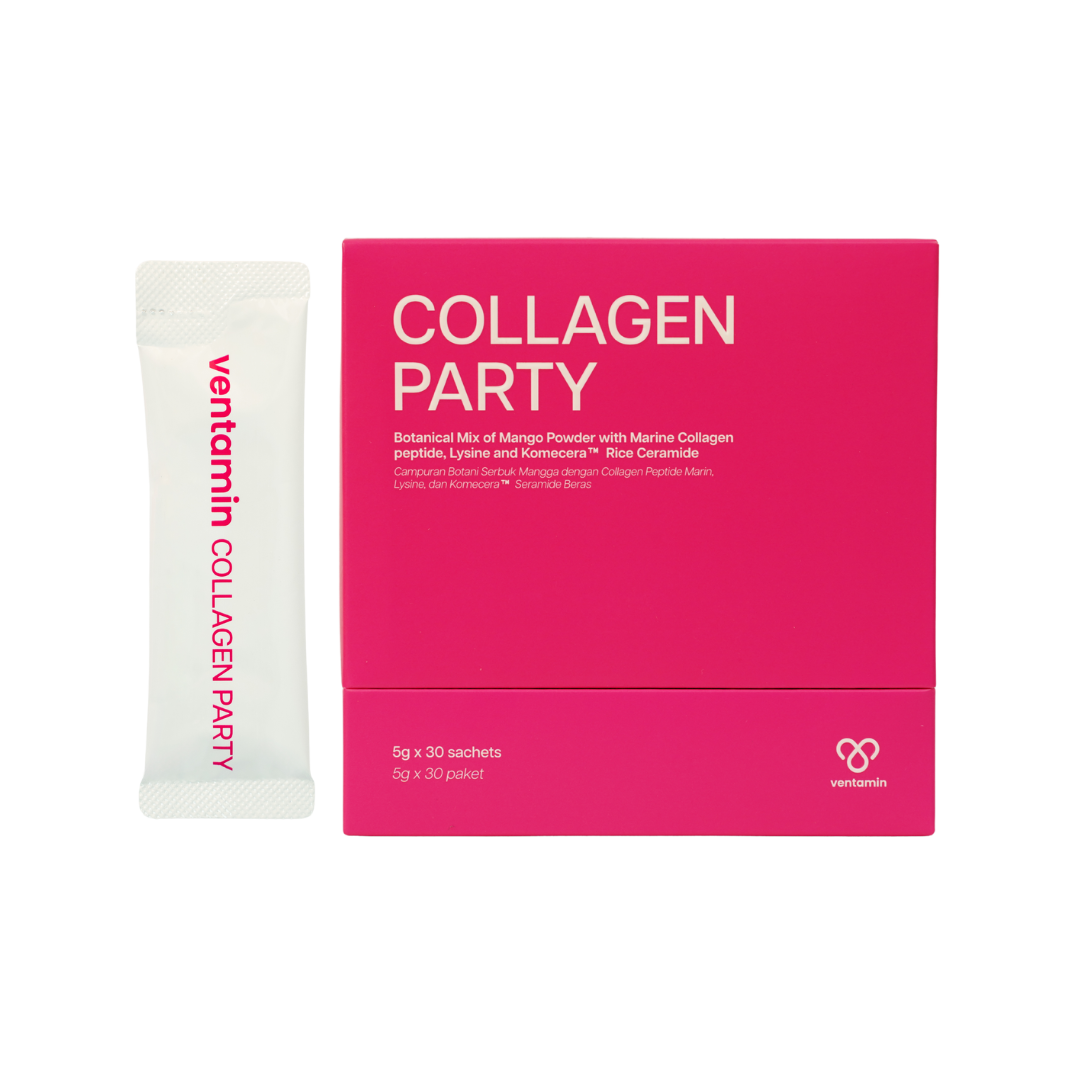
Collagen Party is positioned around a skin-first formula approach: collagen peptides plus supportive amino acid strategy, designed to be used daily long enough for skin structure trends to show.
Simple decision guide: what should you focus on first?
| If your main issue is… | Your bottleneck is likely | Do this first |
|---|---|---|
| “I took collagen and felt nothing” | Consistency / timeline | Commit 84 days and track weekly |
| Texture looks worse after sun | Breakdown winning | Daily sunscreen + reduce UV exposure habits |
| Skin feels tight and irritated | Barrier inflammation | Simplify skincare and moisturize nightly |
| Slow improvement over months | Normal biology | Stay consistent and protect from breakdown |
The “secret number” that predicts results
The number is 84 days.
Most people never take collagen long enough to see a stable trend, so they never find out whether the amino acid profile is benefiting them. If you want a real answer, run the 84-day experiment with sunscreen and a calm barrier.
FAQ
Do I need extra amino acids if I already take collagen?
Not always. But some formulas include supportive amino acids to strengthen the collagen-building workflow. What matters most is that you can take it consistently and protect from breakdown.
Is food protein enough?
Diet matters, but collagen peptides provide a targeted peptide profile. Supplements can make consistency easier for some people.
What’s the fastest way to ruin collagen results?
UV exposure without protection and inconsistent use.
Bottom line: collagen works through amino acids and peptides. Understanding that helps you choose better and stay consistent long enough to see results.
Complete amino acid profile for skin
Shop Collagen Party Now → Complete amino acid profile with optimal ratios for collagen synthesis. Subscribe and save 15%.