
Postpartum skin changes can feel like a betrayal. You do the “right” things, you try to be patient, and yet your skin suddenly looks thinner, drier, looser, or just unfamiliar. And because you’re exhausted, it’s easy to blame yourself or assume you’re stuck with it.
Here’s the truth: postpartum skin is not “you failing.” It is physiology. Hormones shift. Sleep breaks. Nutrient demands change. Inflammation can run higher. And those factors directly affect collagen, hydration, and barrier resilience.
This guide explains what’s happening, what actually helps, and how to build a postpartum-friendly routine that you can realistically follow.
Read to the bottom because there’s one simple checkpoint that tells you whether your recovery plan is working, even before you see big changes in the mirror.
Why postpartum skin feels different (and why it’s normal)
During pregnancy and postpartum, your body is recalibrating. Common skin changes include:
- dryness and sensitivity (barrier shifts),
- loss of “bounce” (collagen and elastin feel reduced),
- under-eye creasing and hollow look (sleep + hydration + stress),
- uneven tone or pigmentation changes,
- breakouts (hormones + stress).
When you’re sleep-deprived, even small texture changes look bigger. That’s not vanity. That’s how lighting and dehydration work.
The postpartum collagen problem: it’s not just “less collagen,” it’s less recovery
Collagen is built during recovery. Postpartum life often destroys recovery. The three biggest postpartum collagen brakes are:
- Sleep fragmentation: your body doesn’t get long, restorative cycles.
- Higher stress load: cortisol and stress signaling can stay elevated.
- Nutrient depletion: especially if breastfeeding and meals are inconsistent.
So the strategy is not “do more.” The strategy is “make the system easier.”
What actually helps postpartum skin (the high-return list)
1. Protect the barrier first
If your skin is irritated, stinging, or constantly tight, adding more actives will backfire. Postpartum skin often needs calming more than it needs “stronger treatments.”
2. Sun protection is non-negotiable
Even minimal daily sun exposure accelerates collagen breakdown and can worsen postpartum pigmentation. You don’t need perfect sunscreen. You need daily sunscreen.
3. Support the “build” side consistently
This is where collagen supplementation can be useful: it’s a low-effort daily habit that supports long-term structure. Consistency matters more than the perfect timing.
4. Stop the all-or-nothing thinking
Many postpartum routines fail because they require 45 minutes and a calm house. That’s not real life. Your plan must survive a chaotic day.
What I see most postpartum patients do that delays results
- Switch products every week because nothing feels fast enough.
- Over-exfoliate to “force glow,” then develop sensitivity.
- Ignore sunscreen because they’re “mostly indoors.”
- Under-eat due to busyness (skin becomes drier and duller).
- Quit too early (collagen and barrier recovery are slow projects).
The postpartum-friendly routine (under 5 minutes)
Morning
- Gentle cleanse or rinse.
- Moisturizer if needed.
- Sunscreen.
Night
- Gentle cleanse.
- Moisturizer.
- If you want one active: choose one, use it 2–3 nights/week, and don’t chase irritation.
That’s it. If you can’t do that consistently, the problem isn’t you. The routine is too complicated.
How Collagen Party fits postpartum life (and how to think about timing)
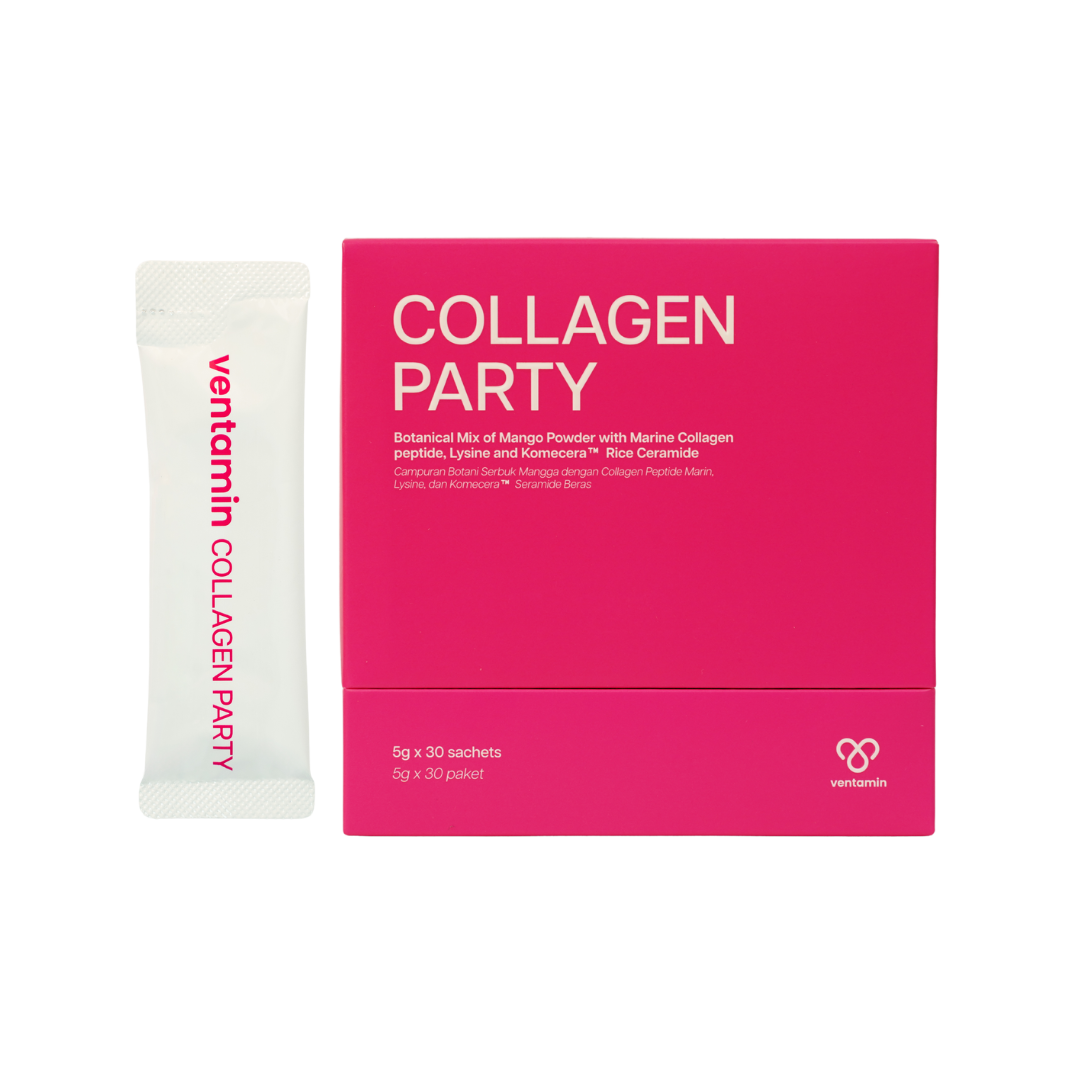
Postpartum routine success is about friction. The easier the habit, the more consistent you’ll be. Collagen Party is designed to be a daily baseline support, not a complicated protocol.
Here is the framing that keeps expectations realistic:
- Weeks 1–4: hydration and skin comfort often improve first.
- Weeks 5–8: texture can start to look smoother in good lighting.
- Weeks 9–16: firmness and “bounce” changes are more noticeable.
But postpartum sleep disruption can slow this timeline. That doesn’t mean “it failed.” It means you’re rebuilding during a difficult season.
Simple decision guide (postpartum edition)
| If you’re dealing with… | Focus on… | First move |
|---|---|---|
| Dryness + sensitivity | Barrier repair | Simplify skincare + moisturizer nightly |
| Dullness + rough texture | Hydration + consistency | Daily sunscreen + stable routine for 4 weeks |
| Loss of firmness | Long-term structure | Collagen habit + sun protection + patience |
| Under-eye creasing | Sleep + hydration | Protect first 90 minutes of sleep + hydrate |
The checkpoint that proves you’re recovering (even before the mirror shows it)
Here is the checkpoint I promised: morning skin comfort.
If you wake up and your face feels less tight, less stingy, and less reactive than it did 2 weeks ago, you’re moving in the right direction. Comfort improves before “glow.” When the barrier stabilizes, collagen and texture changes become more visible.
FAQ
Is it normal for my skin to look worse when I’m not sleeping?
Yes. Sleep fragmentation affects hydration, inflammation, and perceived texture. You’re not imagining it.
Can I use strong actives postpartum?
Some people can, but many can’t tolerate them early on. Start gentle. If you’re stinging, stop and simplify.
How long should I give a postpartum plan before changing it?
At least 4–6 weeks of consistency. Skin biology is slow, especially when life is demanding.
Bottom line: postpartum skin recovery is not about a perfect routine. It’s about a low-friction system you can do consistently while your body recalibrates.
Recovery collagen for postpartum skin
Shop Collagen Party Now → Postpartum skin recovery formula. Subscribe and save 15%.