
Sun exposure is the fastest way to undo your collagen results. Not in a vague, “anti-aging” way. In a very specific, practical way: ultraviolet (UV) light and heat shift your skin into a collagen-breakdown state.
If you are taking collagen and expecting your skin to look firmer, smoother, and more even, but you are also getting daily sun exposure (even through a car window, walking to lunch, or sitting near a window), you are basically running with one foot on the gas and one foot on the brake.
In this guide, I’ll explain what sunlight does to collagen, the common mistakes that quietly sabotage results, and the simple daily system that protects your investment.
Keep reading to the end because I’ll share one number that instantly tells you if your sun protection is “real” or just wishful thinking. Most people get it wrong.
The core idea: collagen is built slowly and broken down quickly
Think of collagen like scaffolding in a building. Your body can lay down new scaffolding over weeks and months, but UV exposure can weaken that scaffolding in a single afternoon. That’s why someone can be consistent for 8 weeks, then have a beach weekend and feel like their skin suddenly looks rougher or duller again.
There are three overlapping problems:
- UVB causes burns and direct DNA damage.
- UVA penetrates deeper and contributes heavily to photoaging (texture, sagging, lines).
- Heat + inflammation amplify oxidative stress and can worsen redness and uneven tone.
Even if you never “burn,” you can still get cumulative UVA damage day after day. That’s why “I don’t burn, so I’m okay” is one of the most expensive misconceptions in skincare.
What sunlight actually does to collagen (plain English)
Collagen in skin is produced mainly by fibroblasts in the dermis. These cells respond to signals. Sun exposure changes those signals in a few key ways:
- Inflammation signals rise: your skin becomes more reactive and barrier function can weaken.
- Oxidative stress increases: reactive oxygen species accumulate and disrupt normal repair.
- Collagen-degrading enzymes are upregulated: collagen is broken down faster than it’s rebuilt.
The result is not only lines and laxity over time, but also that “crepey” feel and a less smooth surface texture. If you live in a sunny climate (including much of Southeast Asia) or you commute in daylight often, this exposure is a daily reality, not an occasional event.
The hidden trap: sunscreen use is often technically correct, but practically wrong
Most people who tell me “I use sunscreen” do one (or more) of these:
- Apply a very small amount (far below what the SPF label assumes).
- Only apply when they plan to be outdoors for a long time.
- Skip reapplication on high-exposure days.
- Use SPF in makeup as their main protection (usually not enough coverage).
- Use sunscreen but ignore hats, shade, and reflective heat.
This matters because collagen loss is cumulative. A small daily gap becomes a big yearly gap.
The “window” problem: UVA still reaches you indoors
UVA can pass through glass. If you sit near windows, work by a window, drive regularly, or spend time in bright cafés, you can still get meaningful exposure without feeling “sunny.” Your skin may not burn. You may not get red. But the signal is still there.
If your collagen results feel slow, don’t just look at your beach days. Look at your weekday light.
Heat exposure: why you can lose collagen without “more sun”
Heat is an underrated factor, especially in humid climates and during outdoor exercise. Heat can increase inflammation and can make sunscreen feel uncomfortable, leading to under-application.
Practical examples that add up:
- Walking outdoors at noon without shade.
- Jogging in direct sun “because it’s only 20 minutes.”
- Outdoor café seating in peak sun.
- Long drives with side-window exposure.
How to tell if sun is the reason your collagen results look “stuck”
Here is a quick self-check. If 2 or more are true, you likely have a protection gap:
- Your face looks darker after weekends or travel.
- You get more redness after being outdoors, even without a burn.
- Your texture looks worse during sunny months.
- You apply sunscreen once in the morning and rarely reapply.
- You rely on SPF in makeup as your main protection.
- You sit near windows or drive often without thinking about UVA.
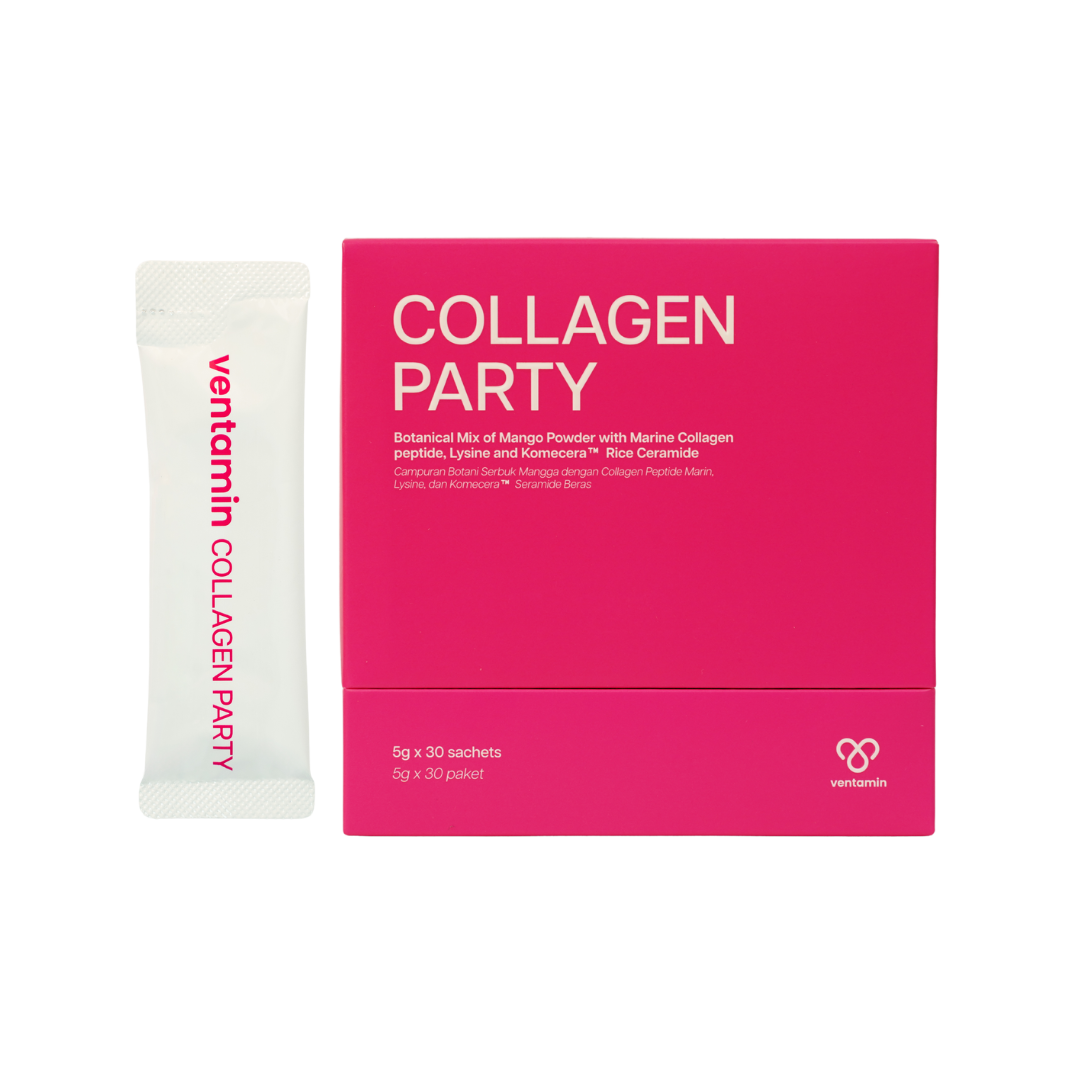
Collagen Party: what it can do, and what it cannot do
Collagen supplementation can support skin structure over time, but it cannot “out-supplement” ongoing UV breakdown. That is why I frame collagen as a two-part system:
- Build: support collagen synthesis consistently (months, not days).
- Protect: reduce the daily breakdown triggers (UV, heat, irritation).
If you only do “build” without “protect,” you get slow gains and frequent setbacks.
The daily system that protects collagen (no drama, just practical)
This is the system I want you to follow for 30 days. It’s boring. It works.
Morning
- Apply broad-spectrum sunscreen to face, neck, ears.
- Don’t forget the sides of the face (near the hairline) and the neck (where skin ages quickly).
Midday
- On high-exposure days, reapply sunscreen. If you are sweating or wiping your face, reapply sooner.
- Choose shade where possible. Collagen protection is not just a product. It is behavior.
Evening
- Gentle cleanse.
- Keep routines barrier-friendly. Over-exfoliation + sun exposure is a classic combination that makes skin look worse.
Simple decision guide: what to do based on your lifestyle
| If you… | Your risk is… | Do this |
|---|---|---|
| Work mostly indoors, away from windows | Moderate | Daily sunscreen every morning |
| Work near windows or drive daily | High (UVA exposure) | Daily sunscreen + consider reapplication on long-drive days |
| Exercise outdoors in the daytime | High (UV + heat) | Time workouts earlier or later + reapply + hat |
| Weekend sun exposure (beach, sports) | Very high | Reapply reliably + shade breaks + protective clothing |
Common questions I get (and the honest answers)
“If I use SPF 50 once in the morning, isn’t that enough?”
Sometimes, for low-exposure indoor days. Often, no. Protection drops with time, sweat, oil, rubbing, and incidental wiping. If you’re outdoors, driving a lot, or sweating, reapplication matters.
“What if I hate the feel of sunscreen?”
Then your job is to find one you can actually wear daily. The best sunscreen is the one you will use consistently. If you only wear the “perfect” one twice a week, your collagen will not care.
“Can supplements protect me from sun damage?”
Supplements can support skin resilience, but they do not replace UV avoidance and sunscreen. Think of them as supportive, not substitutive.
A simple table: what helps collagen most (and what is often overhyped)
| Action | Impact on collagen results | Common failure point |
|---|---|---|
| Daily broad-spectrum sunscreen | High | Under-application, no reapply |
| Shade + hat habits | High | Inconsistent behavior |
| Consistent collagen supplementation | Medium to high (over months) | Expecting week-1 changes |
| Harsh peels/exfoliation “for glow” | Variable | Barrier irritation, rebound sensitivity |
| Only using sunscreen on vacation | Low | Does not protect weekday exposure |
The number that exposes your sunscreen habit
Here’s the “secret number” I promised: 2.
If you spend 2 hours or more in daylight exposure (outdoors, driving, sitting by windows), a single morning application is rarely enough. That “2-hour” threshold is where most people unknowingly fall off the protection cliff.
So if collagen results matter to you, use this question daily:
- Will I get 2 hours of daylight exposure today? If yes, plan a reapplication or behavior protection (shade, hat, timing).
Bottom line: You don’t need perfect. You need consistent, especially on your 2-hour days.
Collagen + sun protection strategy
Shop Collagen Party Now → Pair with daily SPF for complete sun damage prevention. Subscribe and save 15%.