
Generic collagen is the “multivitamin” of the collagen world. It’s not necessarily bad. It’s just often incomplete for the outcome people want: visible skin change.
Most people buy collagen the way they buy shampoo: whatever is popular, whatever is cheap, whatever has the biggest grams on the label. Then they take it for a month and decide collagen is overhyped.
This article explains the hidden gaps in generic collagen, why some collagen works better than others, and what to look for if your goal is skin (not just “protein intake”).
Read to the bottom. There’s a simple decision guide that will tell you in under 30 seconds whether generic collagen is enough for you or whether you’re likely to be disappointed.
What “generic collagen” usually means
Generic collagen products usually have these characteristics:
- They focus on a headline number (grams).
- They have fewer supporting cofactors.
- They are less transparent about peptide profile and sourcing.
- They position collagen as “one ingredient solves everything.”
Again: not automatically bad. But this is where the gap happens between marketing and biology.
The main misconception: your body doesn’t deliver collagen straight to your face
When you ingest collagen, your digestive system breaks it down into peptides and amino acids. Those become:
- building blocks (raw materials),
- signals (cues that influence tissue remodeling).
So the question isn’t “how many grams did I swallow?” The question is “how usable is this, and does it support the collagen-building process?”
The hidden gaps most generic collagen products have
1. They ignore the collagen synthesis workflow
Collagen synthesis is a process. It needs adequate amino acids and supportive conditions (sleep, sun protection, low inflammation). Generic collagen assumes you can just “add collagen” and the body will automatically build skin collagen the way you imagine.
2. They don’t address signaling
Skin collagen production is not a passive event. Your body responds to cues. If you don’t support the signaling side, results may be weaker or slower.
3. They don’t include key supportive amino acids
Two amino acids that matter in collagen structure and stability include L-Proline and L-Lysine. Many generic formulas are “just collagen” without emphasizing a complete functional support approach.
4. They underplay the role of sun exposure
You can’t build collagen effectively while daily UV exposure is breaking it down. Generic collagen products rarely emphasize this because it’s not as exciting as “20g!”
5. They can be harder to stick with
Consistency is the real secret. If a collagen tastes unpleasant, causes stomach discomfort, or feels inconvenient, it will fail in real life. The best formula is the one you’ll actually use daily.
What to look for if skin is the goal
When choosing a collagen product for skin, I care about these things:
- Hydrolyzed peptides (more consistent absorption).
- Quality sourcing (traceability matters).
- Supporting cofactors (to support collagen formation and stability).
- Consistency fit (taste, routine, tolerance).
Where Collagen Party fits
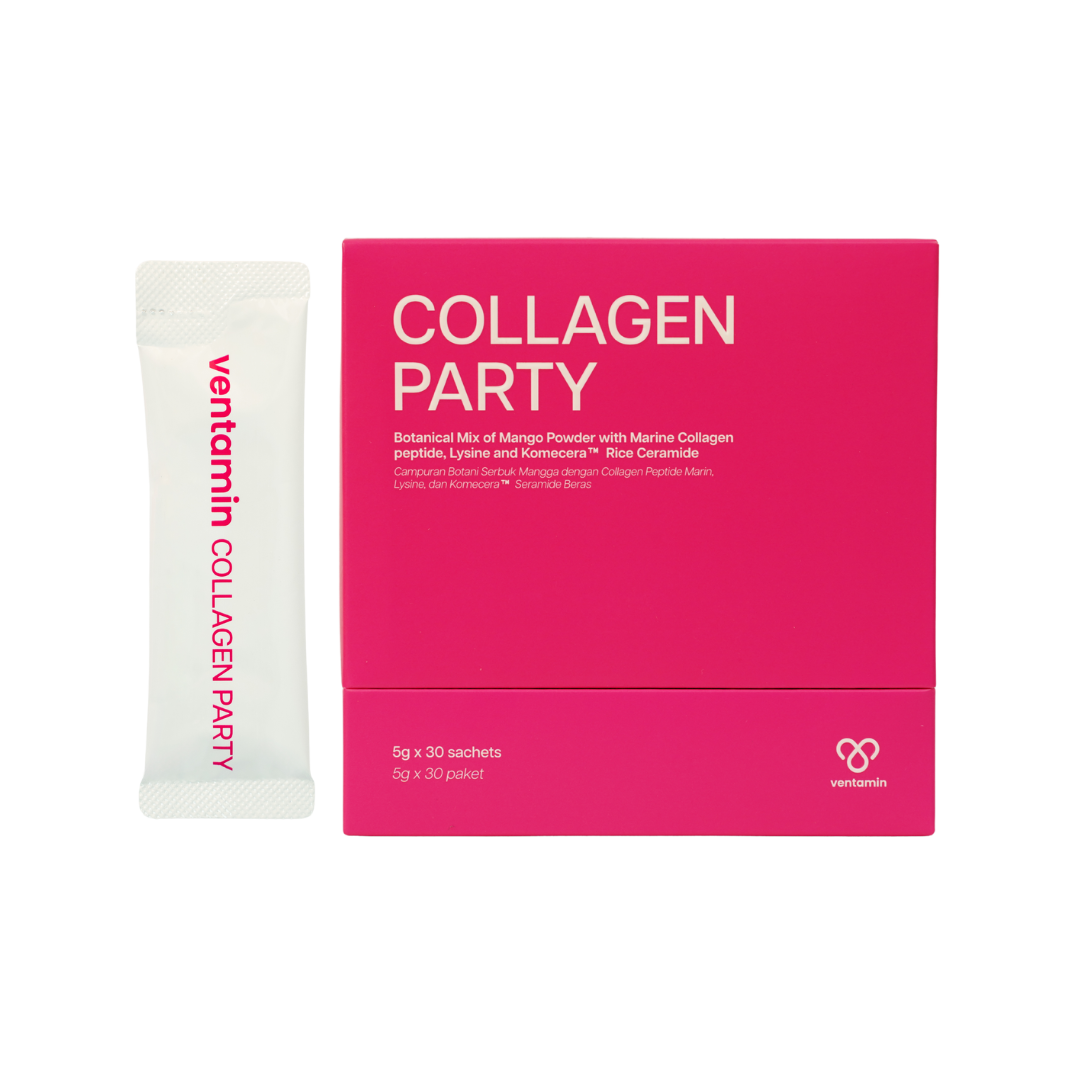
Collagen Party is built around a function-first approach: absorption and supportive amino acids that help your body actually run the collagen-building process, not just “consume collagen.”
But remember: any collagen product will underperform if you ignore sun protection and barrier inflammation.
Simple decision guide: is generic collagen enough for you?
| If you… | Generic collagen might be fine if… | You’ll likely want more if… |
|---|---|---|
| Just want a protein habit | You’re not chasing visible skin change | You want measurable texture/firmness change |
| Have a stable routine | You use sunscreen daily and sleep well | You have sun exposure + poor sleep + stress |
| Get irritated easily | Your skincare is gentle | You over-exfoliate and stay inflamed |
| Want results fast | You can commit 12+ weeks | You quit at 2–4 weeks |
The “secret number” to stop wasting time
The number is 12 (weeks).
If you can’t commit to 12 weeks consistently, it won’t matter whether the collagen is generic or premium. If you can commit to 12 weeks, choose a formula that supports absorption, signaling, and adherence.
FAQ
Is more collagen always better?
No. Beyond an optimal range, “more” may not give more benefit. Consistency and protection matter more.
Can I take generic collagen and still get results?
Some people do. But many are disappointed because they need better absorption, better support ingredients, or better protection habits.
What’s the fastest way to improve results?
Daily sunscreen and barrier-friendly skincare. Those two changes can make any collagen plan look more effective.
Bottom line: generic collagen is not “wrong,” but it often has hidden gaps for people who want visible skin change. Choose based on biology and adherence, not label noise.
What complete collagen supplementation looks like
Shop Collagen Party Now → Collagen + L-Proline + L-Lysine + Japanese Rice Ceramides. Subscribe and save 15%.